COR 1 Instrument
Featured
COR1 Weekly Movies
- STEREO's unique view of the new solar cycle.
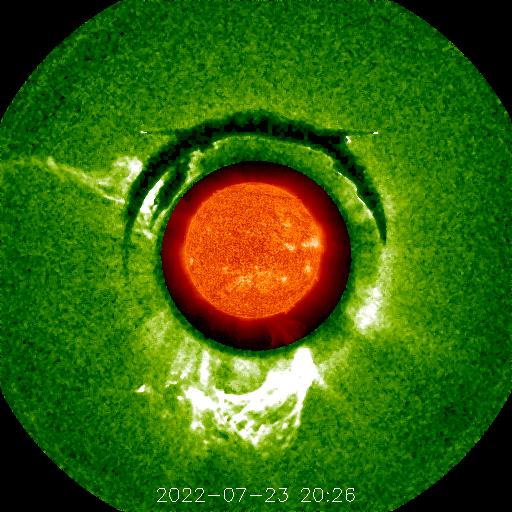
- Spectacular prominence eruption - 2022-07-23
Spectacular prominence eruption seen by the STEREO Ahead spacecraft on 23 July 2022. This eruption was on the far side of the Sun, and did not impact either STEREO Ahead or Earth.
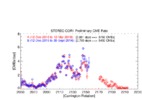
- COR1 Preliminary CME Rate Plot
CME rate plot for both STEREO A and B counts/day (duty-cycle corrected) vs carrington rotation thru 2019-03 (A) and 2014-09 (B).
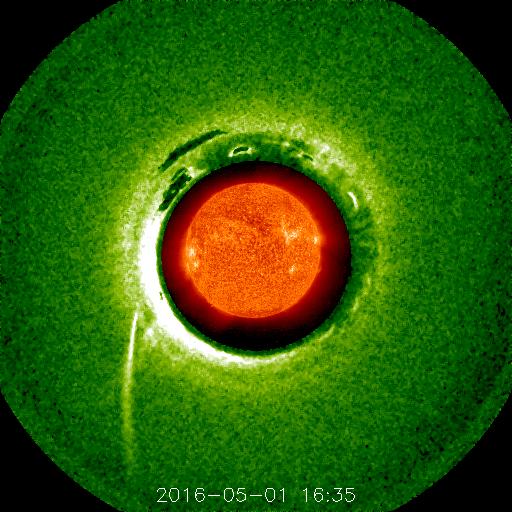
- Sungrazing Comet observed by COR 1 - 2016-05-01
Sungrazing Comet observed by COR 1 - 2016-05-01
Monster Waves on the Sun are Real
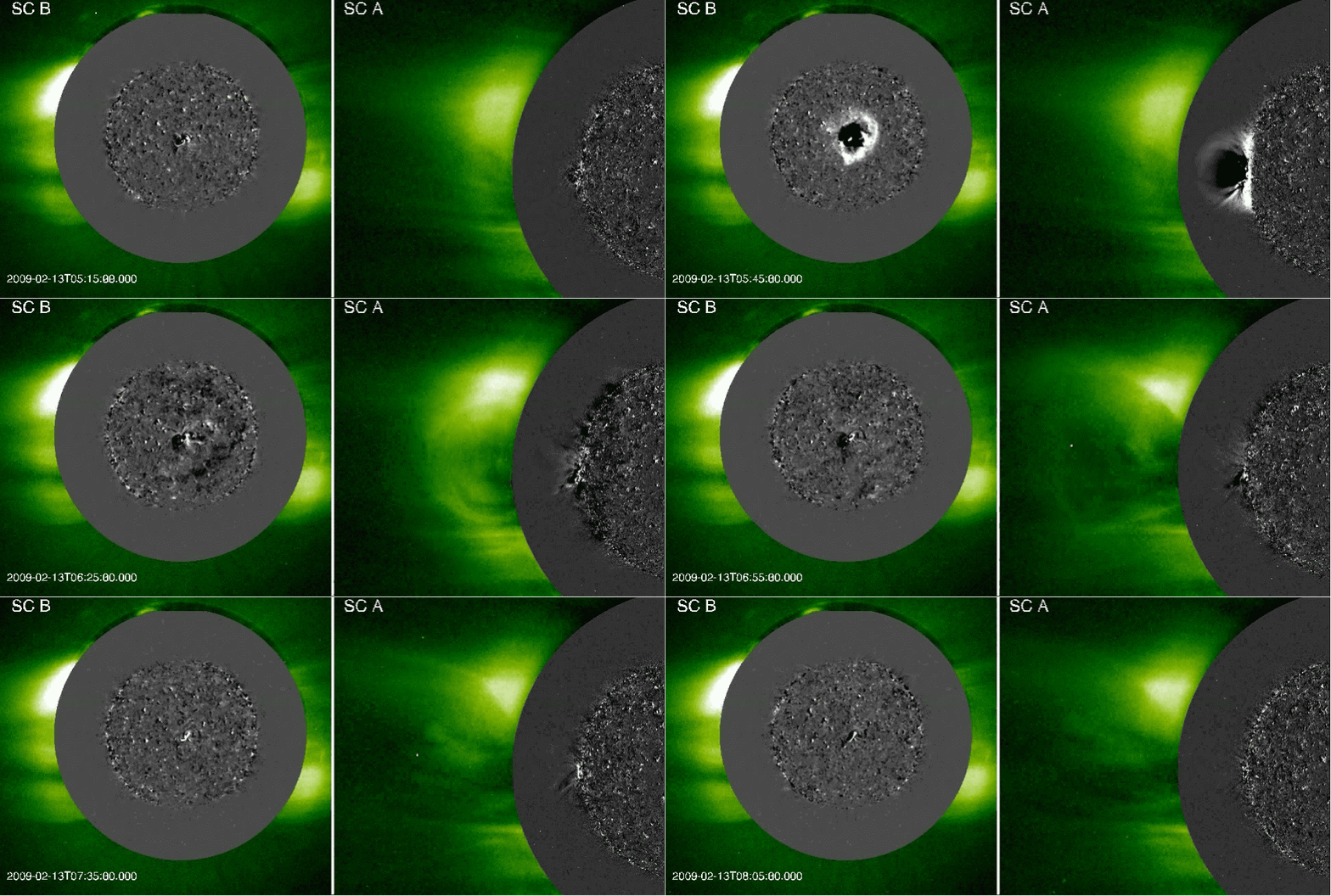
November 24, 2009: Sometimes you really can believe your eyes. That's what NASA's STEREO (Solar Terrestrial Relations Observatory) spacecraft are telling researchers about a controversial phenomenon on the sun known as the "solar tsunami."
Years ago, when solar physicists first witnessed a towering wave of hot plasma racing along the sun's surface, they doubted their senses. The scale of the thing was staggering. It rose up higher than Earth itself and rippled out from a central point in a circular pattern millions of kilometers in circumference. Skeptical observers suggested it might be a shadow of some kind—a trick of the eye—but surely not a real wave.
"Now we know," says Joe Gurman of the Solar Physics Lab at the Goddard Space Flight Center. "Solar tsunamis are real."
The twin STEREO spacecraft confirmed their reality in February 2009 when sunspot 11012 unexpectedly erupted. The blast hurled a billion-ton cloud of gas (a "CME") into space and sent a tsunami racing along the sun's surface. STEREO recorded the wave from two positions separated by 90 degrees, giving researchers an unprecedented view of the event...


